About Butterfly Valves
Butterfly Valves
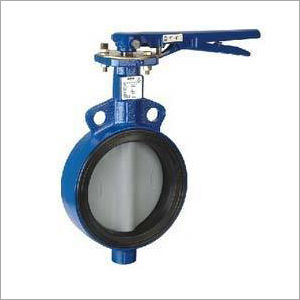
Butterfly Valves is a rotary type hydraulic fitting which is used to control the flow rate in between the flow channels as per the amount of rotation of the rotating disc fixed at the center of this component part. The quarter turn disc is mounted on a rod which rotates as per the movement of the mechanical lever. It can be easily installed within flow line with the help of mechanical fasteners to make tight connections for the prevention of leaks.
Efficient Water Management SolutionDesigned for water distribution and sewage systems, this butterfly valve provides dependable shut-off and flow control. The combination of spheroidal graphite iron and EPDM assures extended service life, resistance to water-related wear, and leak-proof operation. Its manual lever operation allows for straightforward and precise flow adjustments, making it ideal for utility networks and municipal infrastructures.
Adherence to Stringent StandardsManufactured to comply with IS 13095 specifications and IS 1538 flange connections, the valve guarantees uniformity and compatibility in system installations. Rigorous hydrostatic tests with body pressure up to 1.5 MPa and seat pressure up to 1.1 MPa assure safety and durability. Epoxy-coated cast iron safeguards against environmental exposure, extending the lifespan of the valve in harsh conditions.
FAQs of Butterfly Valves:
Q: How does the lever-operated butterfly valve work in water distribution and sewage systems?
A: The lever-operated butterfly valve employs a disc mounted on a shaft, which rotates to open or close the flow. It allows for quick shut-off or regulation, making it suitable for controlling water and sewage flow with manual precision.
Q: What are the benefits of using a spheroidal graphite iron disc and EPDM seat in this valve?
A: A spheroidal graphite iron disc offers enhanced strength and resistance to corrosion, while the EPDM seat ensures excellent sealing properties for water applications, reducing leakage and extending valve life.
Q: Where is this butterfly valve typically installed and what is its recommended application?
A: This valve is commonly installed in pipelines of municipal water distribution systems, sewage treatment facilities, and related infrastructures, delivering reliable performance in medium pressure systems within its port size range.
Q: When should the butterfly valve be selected for a project over other valve types?
A: Choose this butterfly valve when you need rapid operation, moderate pressure control, corrosion resistance, and a cost-effective solution for large-scale water or sewage networks, specifically where manual operation suffices.
Q: What is the process for installing this butterfly valve in a flanged pipe system?
A: Flush the pipeline, align the flanges as per IS 1538 standards, mount the valve centrally, ensure correct gasket placement, and tighten the bolts evenly to achieve a leak-proof connection. Verify its operation before commissioning.
Q: How does the epoxy coating benefit the butterfly valve in long-term usage?
A: The epoxy coating shields the cast iron body from chemicals, moisture, and physical wear, thereby reducing maintenance requirements and enhancing durabilityespecially important in water and sewage environments.

 Send Inquiry


 Send Inquiry

 Send Inquiry
